
Job losses slow, but Europe’s automotive trade imbalance deepens
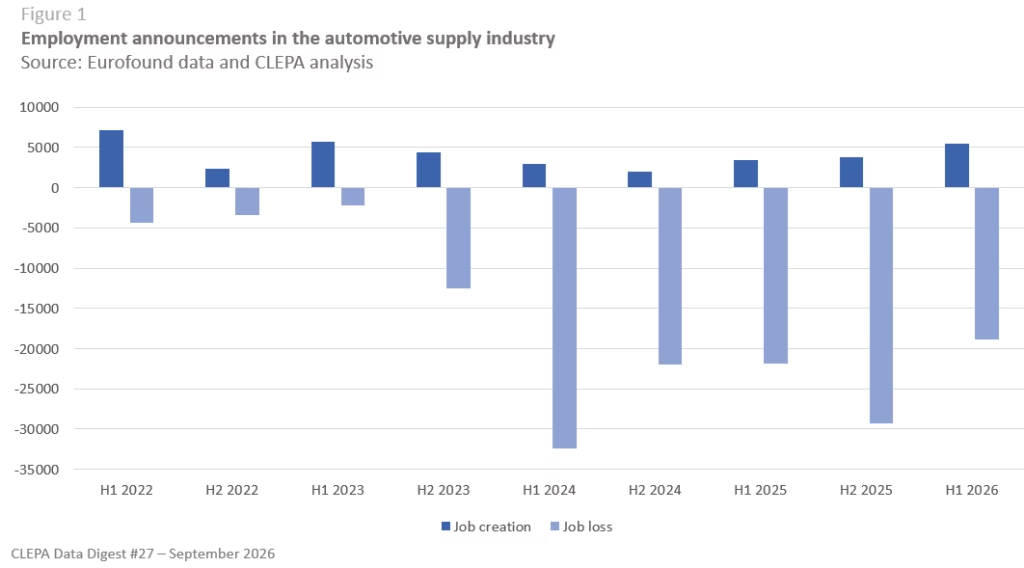
Although job losses continue, new H1 2026 figures suggest that Europe’s automotive supply industry is not seeing spikes as sharp as those in 2024 and 2025. However, the industry has not escaped its underlying crisis. It continues to face intensifying pressure from unfair international competition, driving further restructuring. Suppliers announced 18,900 job cuts in the first semester of 2026, making this the third consecutive year of significant workforce reductions. While this is 35% below H2 2025, the trend remains concerning, and the 4,840 jobs created are far below the number lost.
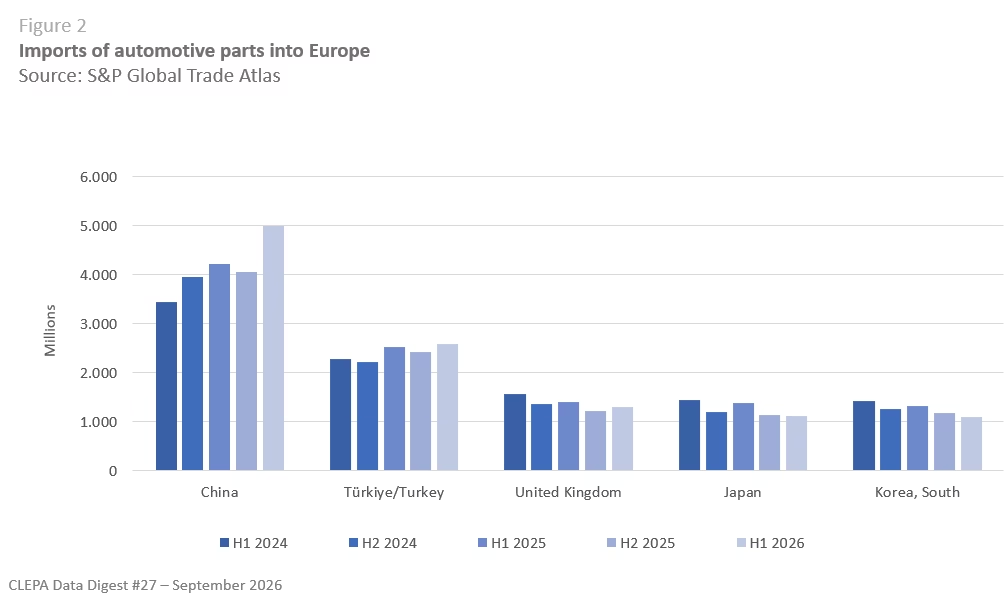
At the heart of this pressure is the growing imbalance in Europe’s automotive trade: China is not only exporting more to Europe, but is also capturing an increased share of the automotive value chain. Chinese component imports reached €5 billion in H1 2026, up 23% year-on-year. The impact is highly visible in Europe’s overall trade performance, which shows the EU increasingly importing while exporting less.
These figures point to a reality that extends beyond a temporary economic downturn. Europe is restructuring its automotive industry just as its position in the global value chain is weakening. Without a targeted industrial strategy to reverse deterioration in production, and policy and market Made in Europe-incentives, this restructuring will lead to the decline of our region’s industrial base.
Benjamin Krieger, Secretary General
Pace of restructuring slows
In H1 2026, automotive suppliers announced 18,900 job losses across Europe, pointing to a third consecutive year of significant workforce reductions. While this is 35% below H2 2025 (29,250), the figure remains above 2022 and 2023 levels. At the same time, 5,440 new jobs were announced, up more than 40% from H2 2025 (3,800) and the highest level in a single semester since the end of 2023.
Based on H1 figures, total job losses in 2026 are likely to remain below the exceptionally high levels recorded in 2024 and 2025. However, renewed restructuring in H2 cannot be ruled out.
While traditional automotive activities continue to contract, employment is increasingly moving towards electromobility-related segments. 66% of all jobs created in H1 2026 were linked to electromobility, suggesting that companies are proactively reshaping production networks and investment decisions, even as overall employment continues to decline.
China’s grip on EU automotive supply chains tightens
EU imports of automotive components from China reached €5 billion in H1 2026, up 23% year-on-year growth rate unmatched by any other sourcing partner. As traditional suppliers steadily lose share of the EU import basket, China is pulling further ahead, deepening a dependency that shows no sign of slowing.
The shift has been striking. In H1 2020, the EU imported around €1.8 billion in automotive components from China, roughly the same as from the UK and Japan. Since then, Chinese component imports have surged, changing where European manufacturers source key automotive components.
Europe’s automotive trade surplus is shrinking, with China driving the reversal
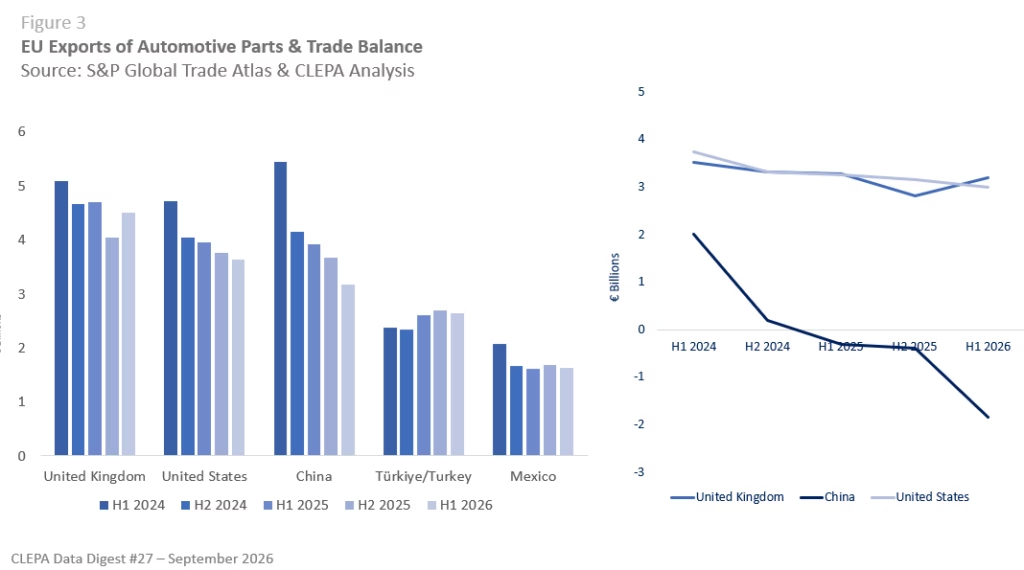
Europe’s automotive trade position is deteriorating at an accelerating pace. While imports continue to grow, exports are moving in the opposite direction: EU automotive exports fell to €24.4 billion in H1 2026, down from €28.9 billion two years earlier. Exports to traditional trading partners such as the UK and Mexico have largely stagnated, while the deterioration in trade with China is particularly striking.
EU exports to China have almost halved in just two years, falling from €5.4 billion in H1 2024 to €3.2 billion in H1 2026. At the same time, imports from China continue to surge, putting growing pressure on Europe’s trade balance.
The result is a rapid erosion of Europe’s automotive trade surplus. After peaking at €14.2 billion in H2 2023, the surplus had fallen to just €8.6 billion by H1 2026. The reversal is most dramatic in trade with China, where a €1.9 billion surplus in H1 2024 had turned into a €1.8 billion deficit just two years later.
Contact CLEPA Communications Team at communications@clepa.be